
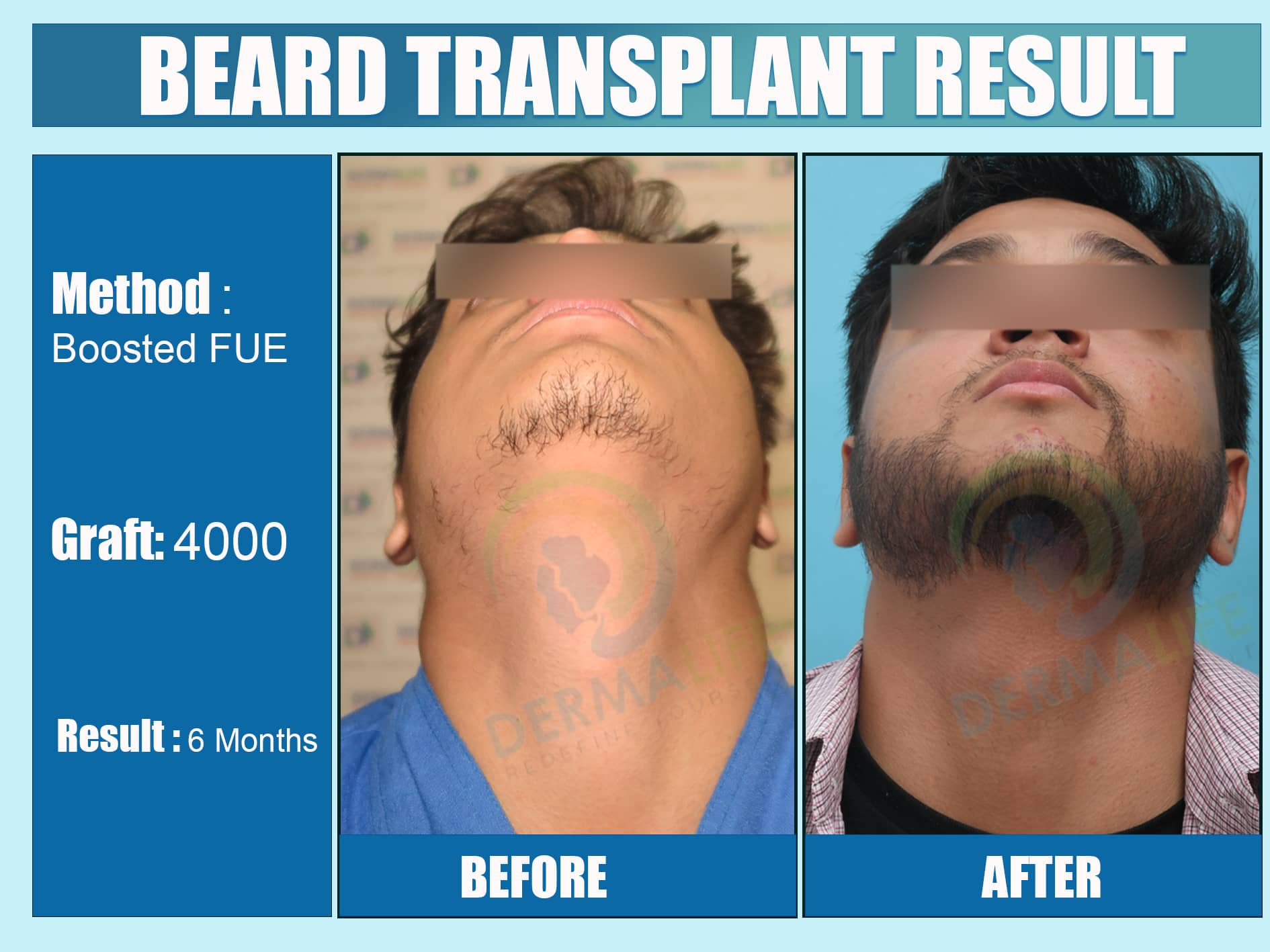
A well-defined beard is an important part of facial appearance for many men. However, not everyone develops uniform facial hair growth. Some individuals have naturally patchy beards, while others experience gaps due to genetics, scars, burns, or previous injuries.
A beard hair transplant is a surgical option that can help improve beard density and create a more balanced facial hair pattern. The procedure involves transferring hair follicles from a suitable donor area to selected regions of the beard.
For people considering facial hair restoration, understanding the procedure, suitability, cost factors, and expected results is essential before choosing a clinic.
What Is a Beard Hair Transplant?
A beard transplant is a procedure in which individual hair follicles are extracted from a donor area, commonly the back or sides of the scalp, and implanted into areas of the face where hair growth is sparse or absent.
The procedure is generally performed using FUE, or Follicular Unit Extraction. Each follicular unit is carefully selected and placed according to the required direction, angle, and distribution of facial hair.
Unlike scalp transplantation, beard restoration requires attention to the natural growth pattern of facial hair. The angle of implantation is particularly important because beard hair generally grows at a low angle against the skin.
Who Can Consider Beard Hair Transplant Surgery?
A beard hair transplant may be considered by men who have:
-
Naturally patchy or uneven beard growth.
-
Areas with limited moustache or beard density.
-
Facial scars with reduced hair growth.
-
Gaps in the beard due to injury or burns.
-
An uneven beard outline.
-
Poor facial hair growth despite having suitable donor hair.
However, not every patient with a patchy beard needs surgery. A dermatologist should first evaluate the reason for reduced facial hair growth. Certain medical conditions and skin disorders may require treatment before surgical restoration is considered.
How Is the Procedure Performed?
The procedure usually involves several stages.
1. Consultation and beard design
The surgeon examines the facial hair pattern, donor area, skin condition, and the patient’s expectations. The desired beard shape and density are discussed before treatment.
2. Donor hair extraction
Hair follicles are extracted individually from a suitable donor region, usually the scalp. Donor hair selection is important because the transplanted follicles should blend naturally with existing facial hair.
3. Recipient site creation
Small recipient sites are created in the areas requiring restoration. Their direction, angle, and distribution are planned to match the natural beard pattern.
4. Graft placement
The extracted follicles are placed carefully into the recipient sites. Proper placement helps create a natural transition between existing beard hair and transplanted follicles.
The number of grafts required varies according to the size of the area, existing beard density, facial structure, and desired coverage.
Beard Hair Transplant Cost in Delhi
The beard transplant cost in Delhi varies from patient to patient. There is no single price that applies to every procedure because the treatment area and number of grafts can differ significantly.
Some of the factors that influence the cost include:
-
Number of grafts required.
-
Size of the patchy or hairless area.
-
Whether the procedure involves the cheeks, jawline, chin, or moustache.
-
Donor hair availability and characteristics.
-
Complexity of the beard design.
-
Surgeon’s experience and clinic facilities.
Patients should request an individual assessment rather than relying only on generic online prices. A clear quotation should explain the proposed graft count, treatment plan, and what is included in the procedure.
Why Natural Beard Design Matters
The success of a beard transplant is not determined only by the number of grafts implanted. The final appearance also depends on the direction, angle, and distribution of the transplanted follicles.
A beard that is too dense in one area or has an unnatural outline may look different from the surrounding facial hair. The surgeon must consider the patient’s facial proportions and existing beard pattern when designing the recipient area.
The aim is to create a balanced appearance rather than simply filling every visible gap.
Recovery and Expected Results
After a beard transplant, patients may experience temporary redness, swelling, small crusts, or sensitivity in the treated area. These effects generally settle during the initial recovery period, although recovery varies between individuals.
Transplanted hairs may shed during the early weeks. This is a common part of the hair growth cycle, and new growth develops gradually over the following months. Final results take time and should not be judged immediately after surgery.
Patients should follow the clinic’s post-operative instructions and attend recommended follow-up appointments.
Beard Hair Transplant at Dermalife, New Delhi
Dermalife Skin & Hair Clinic in Green Park Extension, South Delhi, provides FUE-based hair restoration services under the direction of Dr. Gaurav Garg, a dermatologist and hair transplant surgeon.
Dr. Garg completed his postgraduate training in Dermatology and Venereology at Seth G. S. Medical College and KEM Hospital, Mumbai. His additional training includes hair transplant surgery in Israel, dermato-surgery at PGI Chandigarh, and advanced dermatology and laser training at the National Skin Centre, Singapore.
The suitability of a beard hair transplant is assessed individually, with attention to donor hair availability, facial hair characteristics, and the patient’s expectations.
Final Thoughts
A beard hair transplant can be an option for men who want to improve patchy facial hair or restore hair in areas affected by scars or injuries. However, natural-looking results depend on careful planning, appropriate donor selection, and precise graft placement.
Before deciding on surgery, patients should consult a qualified hair transplant surgeon, understand the limitations of the procedure, and receive a personalised treatment plan. Choosing a clinic based on surgical expertise and transparent consultation is more important than selecting one based only on price. Dermalife also offers unshaven fue hair transplant.
