
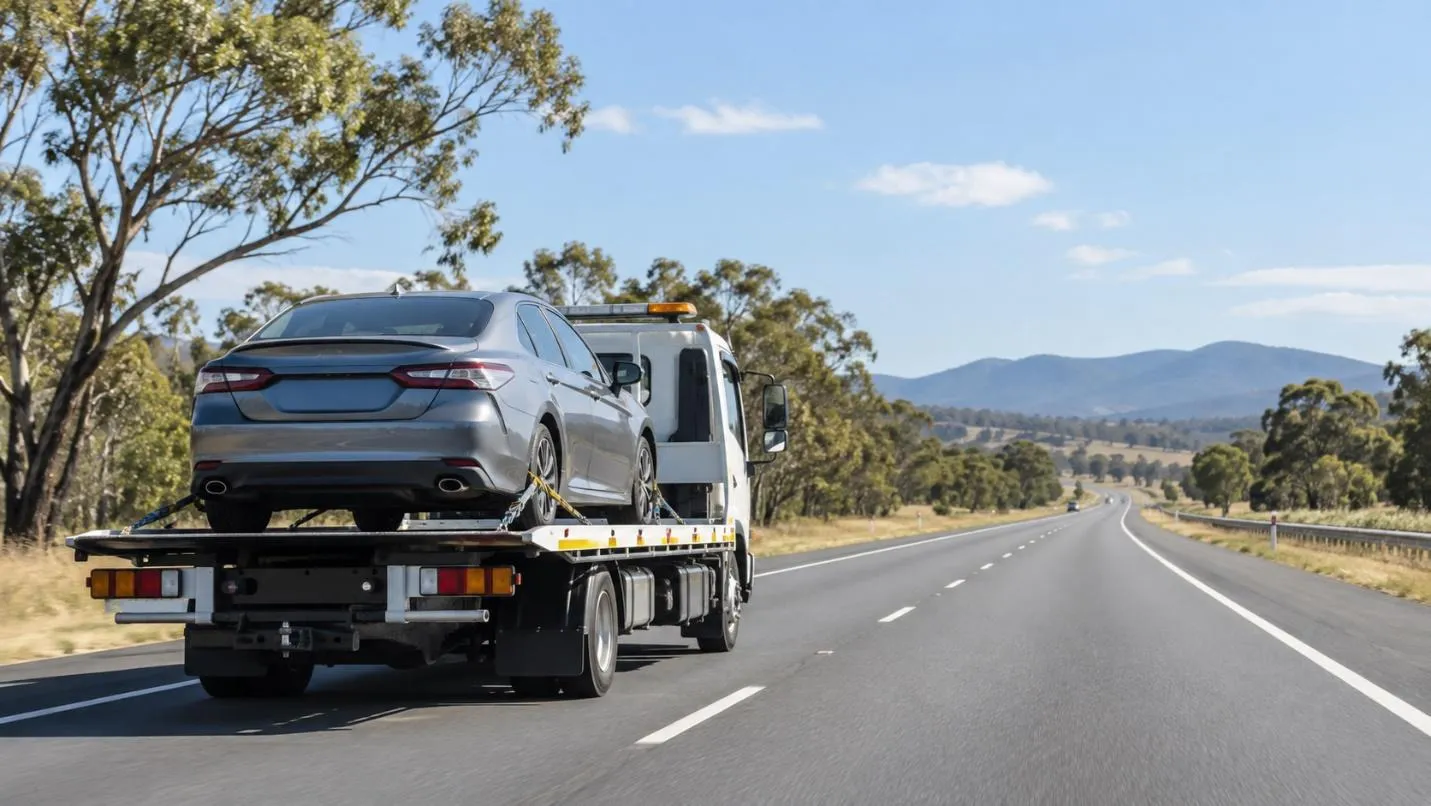
Moving a vehicle from one Australian state or territory to another can seem straightforward, but there are several practical considerations worth sorting out before the vehicle leaves its current location.
People move vehicles interstate for many reasons. You might be relocating for work, purchasing a car from another state, sending a vehicle to a family member, transporting a project car or moving a vehicle that cannot safely be driven over a long distance.
Whatever the reason, a little preparation can make the process much smoother. The main things to consider are how the vehicle will be transported, its registration status, insurance, its mechanical condition and whether there are any access issues at the collection or delivery point.
Decide How the Vehicle Will Be Moved
The first decision is whether the vehicle should be driven or professionally transported.
Driving it yourself can make sense when the vehicle is registered, roadworthy and suitable for a long trip. However, once significant distances are involved, you also need to consider fuel, accommodation, travel time, additional kilometres and general wear on the vehicle.
Professional transport can be more practical when the vehicle is unregistered, mechanically unreliable, accident damaged or simply not something you want to drive hundreds or thousands of kilometres.
For vehicles that cannot reasonably be driven to their destination, professional interstate towing can provide a practical way to move them between states without adding unnecessary kilometres or requiring the owner to make the journey themselves.
The most suitable transport method will depend on the vehicle itself, its location and the distance involved.
Check the Registration Requirements
Registration rules are managed separately by each Australian state and territory, so moving a vehicle interstate can sometimes involve more than simply changing the address attached to the registration.
The process may be different depending on whether you are relocating your own vehicle or purchasing one from another state.
Depending on the circumstances, you may need to consider registration transfer requirements, proof of ownership, vehicle inspections, number plates or permits for an unregistered vehicle.
Before arranging transport, check the requirements of the road authority responsible for the state or territory where the vehicle will ultimately be registered. This may include organisations such as Access Canberra, Transport for NSW, VicRoads or Service Tasmania.
Getting the paperwork sorted early can prevent the vehicle reaching its destination only for you to discover that additional inspections or documents are required.
Understand Your Insurance
Insurance is another area worth checking before the vehicle is collected.
Start by reviewing your own vehicle insurance policy to determine what protection applies while the car is being transported. Coverage can vary considerably between policies.
You should also ask the transport operator what insurance or liability arrangements apply while the vehicle is in their care.
Before collection, take clear photographs of the vehicle from several angles. Include any existing dents, scratches, cracked panels or other visible damage.
These photographs provide a useful record of the vehicle’s condition before transport and can help avoid uncertainty later.
Prepare the Vehicle Before Collection
Preparing the vehicle properly makes loading and delivery easier for everyone involved.
Remove valuables and unnecessary personal belongings before transport. Loose objects inside the cabin or boot can move while the vehicle is being transported, so anything that does not need to travel with the car is generally better removed.
You should also:
-
Photograph the exterior and interior.
-
Record any existing damage.
-
Make sure the vehicle can be accessed.
-
Provide the correct keys.
-
Tell the operator about mechanical problems.
-
Mention flat tyres, steering issues or locked wheels.
-
Secure or remove loose accessories.
-
Follow any fuel-level instructions provided by the transporter.
If the vehicle does not run, do not simply describe it as “not starting”. Explain what you know about the problem.
A vehicle with a flat battery is very different from one with seized wheels, damaged suspension or steering that cannot be turned.
Tell the Operator About Access Restrictions
Where the vehicle is located can be just as important as the condition of the vehicle itself.
A car parked on an open residential street is generally easier to collect than one located several levels underground, behind a narrow driveway or inside a restricted commercial property.
Potential complications include low-clearance car parks, steep ramps, tight corners, narrow driveways, gated properties and streets where larger towing vehicles have limited manoeuvring space.
Underground Towing & Salvage regularly works with vehicles located in difficult-access environments, including underground and restricted areas where clearance and manoeuvrability can affect the recovery approach.
Providing these details before collection gives the operator an opportunity to determine what equipment is likely to be required.
Be Clear About the Vehicle’s Condition
Do not assume that the transport company only needs the make and model.
The mechanical and physical condition of the vehicle can influence how it needs to be loaded.
A fully operational passenger vehicle is relatively straightforward. An accident-damaged vehicle with broken suspension or wheels that will not turn can require a very different approach.
Make sure you disclose whether the vehicle is:
-
Running or non-running.
-
Accident damaged.
-
Lowered or modified.
-
Missing wheels.
-
Unable to steer.
-
Unable to roll freely.
-
Unregistered.
-
Larger or heavier than a typical passenger vehicle.
Accurate information helps the transport operator plan the job before arriving rather than discovering unexpected complications at pickup.
Understand What Affects the Price
Distance is an important part of interstate vehicle transport pricing, but it is not always the only factor.
The cost may also depend on the size and weight of the vehicle, where it is being collected, how easily it can be loaded and whether specialised equipment is needed.
A non-running vehicle in a difficult-access location may require more time and equipment than a functioning vehicle waiting in an accessible driveway.
When asking for a quote, provide as much information as possible about the vehicle and both locations.
A useful quote request should include the make and model, collection suburb, destination, whether the vehicle runs and any known access restrictions.
That gives the operator a much better basis for providing an accurate price.
Plan the Collection and Delivery
Interstate vehicle movements involve more coordination than a short local tow.
Make sure the collection and delivery addresses are correct and that someone authorised can release and receive the vehicle if you will not be present.
It is also sensible to exchange contact information with the people involved at both ends.
Where possible, avoid arranging collection or delivery in locations where access depends on narrow time windows unless this has already been discussed with the transport operator.
Once the vehicle arrives, inspect it and compare its condition with the photographs taken before transport.
Expert Advice: Provide the Details Early
According to Joshua Harrison, Founder of Underground Towing & Salvage, one of the most important parts of organising an interstate vehicle move is giving the transport operator an accurate picture of the vehicle and both access locations before the job begins. Whether a vehicle is running, damaged, lowered or stored in a restricted car park can change the equipment and loading approach required. Providing those details early helps the operator plan the movement correctly rather than discovering complications at collection.
That preparation becomes especially important when unusual vehicles or difficult collection locations are involved.
Through years of transporting and recovering vehicles, Underground Towing & Salvage has found that many complications can be avoided when vehicle condition, access restrictions and delivery requirements are discussed before collection rather than on the day of transport.
Preparation Makes Interstate Vehicle Transport Easier
Moving a vehicle between Australian states does not need to be complicated, but it does require some planning.
Start by deciding whether driving or professional transport is the better option. Then check the registration requirements that apply at the destination, confirm your insurance position and document the vehicle’s condition before collection.
Most importantly, give the transport operator accurate information about the vehicle and its location.
Knowing about a non-running engine, damaged wheel or low-clearance car park before collection allows the right equipment and approach to be planned from the beginning.
A well-prepared interstate vehicle move is generally a much smoother one for everyone involved.
