
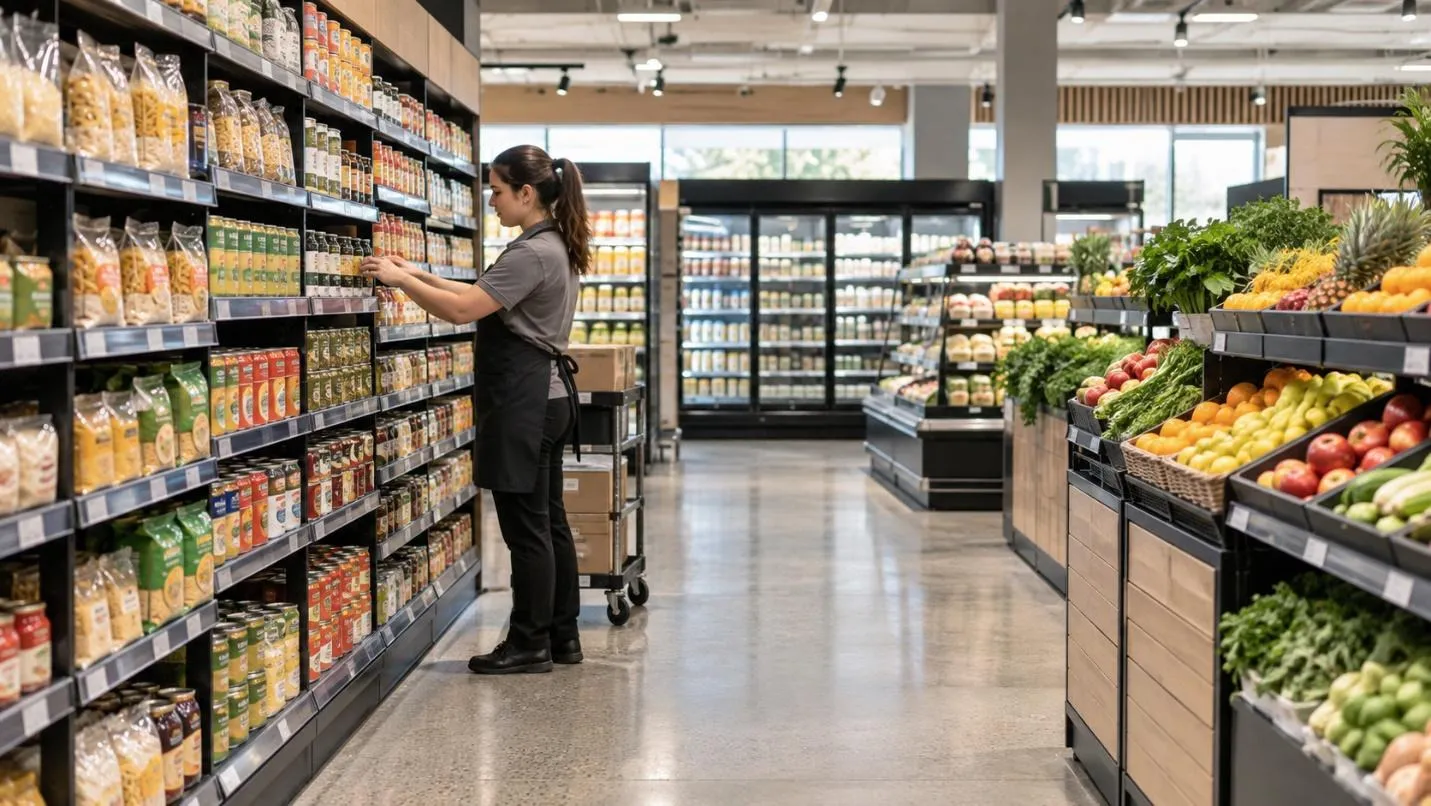
Running an efficient grocery store requires more than keeping products in stock and customers moving through the checkout. Every part of the store, from aisle layouts to product displays, influences how quickly employees can replenish shelves, how easily customers find products and how effectively retailers use their available space.
For Australian grocery retailers, rising operating costs and changing customer expectations make these everyday efficiencies increasingly important. Yet shelving is often overlooked when businesses look for ways to improve store performance.
Outdated or poorly configured shelving can create unnecessary obstacles, restrict product capacity and make routine tasks more time-consuming.
Upgrading grocery store shelving is therefore more than a cosmetic improvement. With the right configurations, retailers can create more organised, accessible and adaptable shopping environments while making better use of their existing floor space.
1. Making Better Use of Available Retail Space
Retail floor space is a valuable resource, particularly for independent grocers, convenience stores and smaller supermarkets operating within limited premises.
Poorly planned shelving layouts can leave vertical space unused, create unnecessarily wide or narrow aisles and restrict the number of products retailers can display. These limitations can become more noticeable as stores expand their product ranges or introduce new merchandise.
Modern shelving systems offer greater flexibility through adjustable shelf heights, different unit dimensions and configurations designed for specific areas of a store.
For retailers looking to make better use of their available floor space, grocery store shelving by Mills Shelving provides flexible configurations that can accommodate different product categories, store layouts and merchandising requirements.
Double-sided gondola shelving, for example, allows retailers to display products on both sides of an aisle, while single-sided shelving can maximise display capacity along walls and other perimeter areas.
Adjustable shelves also allow businesses to accommodate products of different heights without leaving unnecessary gaps between levels.
However, increasing display capacity should not come at the expense of accessibility. Retailers need to balance the number of products they display with comfortable aisle widths, customer movement and safe access for employees.
An effective shelving upgrade should make the existing space work harder without making the store more difficult to navigate.
2. Reducing the Time Spent on Stock Replenishment
Stock replenishment is one of the most frequent tasks in grocery retailing. Employees must regularly restock shelves, organise products, check expiry dates and maintain displays throughout the trading day.
When shelving is poorly configured, these routine activities can take longer than necessary.
Products stored on difficult-to-reach shelves, overcrowded displays and inconsistent shelf arrangements can create additional handling requirements. Employees may also need to move products repeatedly to access stock or maintain appropriate product rotation.
Upgrading shelving gives retailers an opportunity to organise displays around how products are handled and replenished.
Adjustable shelf heights can accommodate different packaging sizes, while appropriate shelf depths can make it easier to access products without unnecessarily reaching behind other stock.
Frequently replenished items can also be positioned at accessible heights, reducing the amount of bending, stretching and rearranging required during routine restocking.
Based on experience supporting Australian retail businesses, Mills Shelving recognises the importance of selecting shelving configurations that accommodate both customer accessibility and everyday stock replenishment. A layout that displays products effectively but makes replenishment difficult can create unnecessary work for employees.
By considering how staff interact with shelving throughout the day, grocery retailers can create layouts that support more efficient stock handling and consistent product availability.
3. Improving Product Visibility and the Customer Shopping Experience
Efficient grocery store shelving should support customers as well as employees.
Customers generally want to locate products quickly, compare available options and move comfortably between different sections of a store.
Overcrowded displays, inconsistent shelf heights and poorly organised product categories can make these activities more difficult.
Modern shelving configurations allow retailers to arrange products more logically, maintain consistent displays and improve visibility across different categories.
For example, adjusting shelf heights to accommodate product packaging can help prevent taller items from obstructing adjacent displays. Grouping related products within clearly defined sections can also make it easier for customers to locate what they need.
Flexible shelving is particularly useful when retailers introduce seasonal promotions, expand product categories or change their merchandising arrangements.
Instead of replacing entire shelving units, businesses can adjust existing configurations to accommodate different products and display requirements.
Well-planned shelving also supports clearer sightlines and easier movement through the store, helping customers navigate the shopping environment without unnecessary obstacles.
The objective is not simply to display more products, but to make those products easier to find, access and purchase.
4. Choosing Shelving That Can Withstand Everyday Grocery Store Demands
Grocery store shelving must withstand frequent product handling, changing stock levels and continuous customer activity.
Products such as bottled drinks, canned goods, cooking oils and bulk grocery items can place considerable weight on display units. Shelving that is unsuitable for these loads may sag, deteriorate or become unstable over time.
This makes durability and load capacity important considerations when planning an upgrade.
Retailers should select shelving with load ratings appropriate for the products being displayed and ensure that units are installed and used according to the manufacturer’s specifications.
Suitable materials and finishes also matter. Grocery environments require surfaces that can be cleaned and maintained efficiently, particularly in areas where products may spill or packaging can become damaged.
Mills Shelving recommends considering expected product weights, replenishment frequency and future merchandising changes when selecting shelving for a grocery store.
Choosing suitable shelving from the outset can help retailers avoid premature replacement, additional installation expenses and disruption associated with damaged or unsuitable units.
Modular shelving systems offer another practical advantage.
As product ranges change, retailers can adjust shelf positions or reconfigure compatible units rather than replacing their entire shelving arrangement.
This flexibility can help businesses accommodate new merchandise and changing operational requirements while retaining existing infrastructure.
5. Planning Shelving Around Daily Store Operations
A successful shelving upgrade requires retailers to consider how the store operates throughout the day, rather than focusing exclusively on its appearance or maximum display capacity.
The most effective configuration will depend on factors such as product weight, stock turnover, available floor space, customer movement and the frequency of replenishment.
According to Neil Webster, CEO of Mills Shelving, retailers should assess how their shelving will function during everyday store operations before deciding on a configuration. Shelving needs to accommodate the products being displayed while allowing employees to replenish stock efficiently and customers to move comfortably through the store. Choosing adjustable, appropriately rated shelving can also give businesses greater flexibility as their product ranges and merchandising requirements change. The goal is to create a practical layout that supports current operations without unnecessarily restricting future changes.
This approach encourages retailers to view shelving as part of their broader operational infrastructure rather than simply as a way to display merchandise.
6. Planning a Shelving Upgrade Without Disrupting Store Operations
Replacing grocery store shelving requires careful planning, especially for businesses that need to maintain regular trading hours.
Removing existing fixtures, relocating products and installing replacement units can temporarily restrict customer access and interrupt stock replenishment.
Retailers can reduce these disruptions by assessing their current layout and identifying the areas where improvements would deliver the greatest practical benefit.
For example, sections with overcrowded displays, frequently replenished products or insufficient shelf capacity may be appropriate starting points.
Before purchasing replacement shelving, businesses should review product dimensions, expected loads, available floor space and the types of displays they intend to introduce.
Installation can then be scheduled during quieter trading periods or completed in stages to avoid unnecessarily closing large sections of the store.
Workplace safety should also be considered throughout the planning process.
Guidance from Safe Work Australia on hazardous manual tasks and workplace risk management provides a useful reference when assessing how employees access, handle and replenish stock.
Retailers should ensure that shelving is installed securely, used within its rated capacity and positioned to support safe access and movement.
Planning these requirements before installation helps avoid purchasing shelving that looks suitable but does not adequately support the store’s daily operations.
7. A More Efficient Grocery Store Starts With Better Planning
Upgrading grocery store shelving is an opportunity for Australian retailers to improve how their stores function, not simply how they look.
Appropriately configured shelving can support better use of available floor space, more efficient stock replenishment, improved product visibility and easier maintenance.
Durable, adjustable systems also give retailers greater flexibility to accommodate changing product ranges without repeatedly replacing existing fixtures.
Ultimately, the value of a shelving upgrade depends on how well the chosen configuration supports the store’s products, employees and customers.
By treating shelving as an essential part of everyday store operations, retailers can create more practical shopping environments while making better use of their existing retail space.
