
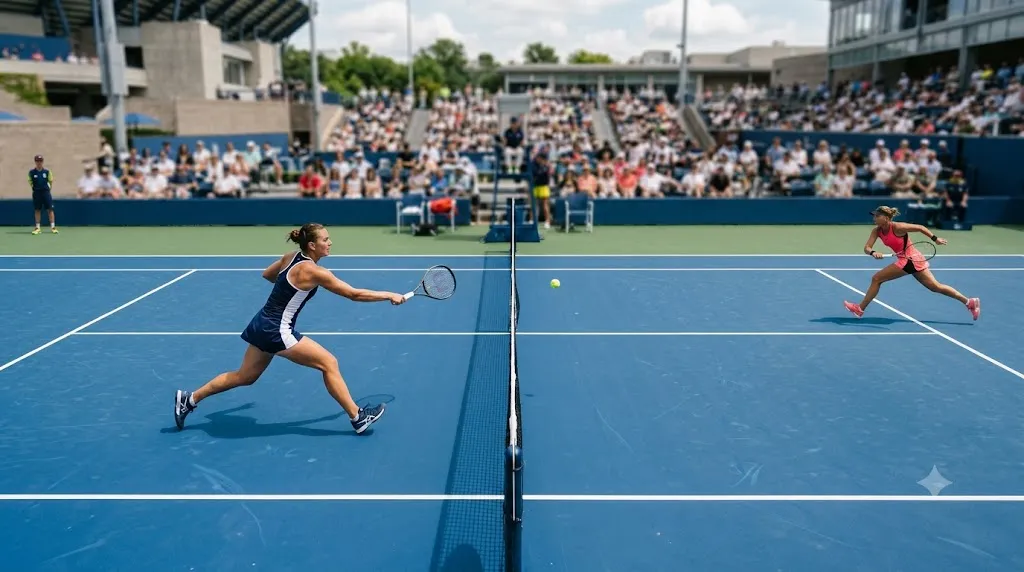
A tennis scoreboard compresses a complex contest into a handful of digits. Two players may be level at four games apiece while one is continually under pressure on second serve. Someone arriving through reddy anna official book tennis betting searches might see match-related numbers, but a richer reading starts with movement, placement and rally patterns. The score tells us where the match stands, not exactly why.
Watch one return game closely. Does the receiver stand further inside the baseline against the second serve? Is the server directing most first deliveries towards the backhand? Small adjustments can reveal more about tactical confidence than a dramatic commentator’s declaration that momentum has changed. The patterns become clearer over several games.
Points tell only part of the story
Two players can reach the same score while winning rallies in sharply different ways. A love-hold can be built from aces or from long rallies that exhaust the receiver.
Serve placement, court position and recovery time reveal tactical advantages. Those paths look identical on the scoreboard but reveal different strengths. Tracking serve placement and the depth of the first groundstroke provides a better basis for interpreting the game.
Surface shapes decisions
Unlike claims surrounding Live Cricket Betting cricket and tennis require different forms of tactical analysis. Grass rewards some patterns differently from clay or a slow hard court. On grass, a low bounce may reward a flatter stroke and confident movement forward.
Players adapt spin, footwork and return positions to the pace and bounce. Clay often lengthens exchanges and tests recovery after wide shots. Humidity, wind and court wear add further complications. Player preference matters, but the surface changes the choices available.
A rally tells its own story
Picture a player driving deep to the backhand corner and then moving forward after a short reply. The point might finish with a routine volley, but the decisive choice came two shots earlier. Often times the highlight clip will exclude that setup and make the last stroke more significant than it is.
Studying several rallies shows whether the plan is repeatable or simply an isolated success. Court positioning, recovery steps and shot tolerance can reveal sustained pressure that a single winner cannot explain. This makes match analysis more interesting without turning it into false prediction.
Pressure appears in sequences
A single break point matters emotionally, but repeated return pressure is often more revealing. A single break point can become a memorable turning point, yet repeated deuce games may indicate more persistent pressure.
Watch whether second serves become more cautious late in sets. Notice whether a tired player protects the second serve or shortens rallies. These signs need repeated observation before they become convincing conclusions.
Different sports need different lenses
In cricket the game is divided into overs and wickets and in tennis it is divided into games and sets. It’s a misconceived notion to extrapolate scoring rates from cricket to tennis.
Importing a momentum rule from one sport into another can create misleading interpretations. Tennis requires players to win games and sets in a structured sequence, with serve order creating changing advantages. A short run of points can feel decisive without establishing the direction of the next set.
The serve is not one statistic
First-serve percentage matters, but the location and effectiveness of the second serve can determine how much pressure a player faces. A high percentage of weak first serves may invite aggressive returns, while fewer but well-placed serves can produce comfortable holds.
Compare how both players react after the return, rather than looking only at aces and double faults. Some points are shaped by the fourth stroke or a sudden change of direction. Those recurring patterns give context to the score without guaranteeing the next game.
Stay curious about uncertainty
Injuries, fatigue and changing conditions complicate even careful statistical analysis. A medical timeout or sudden change in movement can affect a player’s options, but spectators may not know its cause.
The best sports writing explains competing possibilities without pretending that a score guarantees the result. Good commentary distinguishes visible behaviour from speculation about injury. Weather and fatigue add uncertainty even when previous head-to-head statistics strongly favour one side.
Conclusion
Understanding tennis means attending to patterns that a scoreboard cannot display.
Readers encountering reddyyannna.com should separate this sporting interest from any commercial betting representations and check operator claims and local law independently. A careful account of serve, movement and surface is more valuable than implying that a sequence of points can guarantee what happens next.
