

Navigating the fast-paced world of football analysis requires reliable data, sharp insights, and real-time updates. For enthusiasts looking to track match probabilities and market movements accurately, Kèo nhà cái 5 has emerged as an essential resource for clear, structured, and up-to-date football metrics. Whether you are evaluating major European leagues or keeping an eye on international tournaments, understanding how odds are formulated and how to interpret them can transform the way you follow the beautiful game.
Football is a sport of margins, momentum, and tactical nuance. Behind every matchline lies a complex calculation of team form, injury reports, historical matchups, and market sentiment. By breaking down these numbers systematically, fans and analysts alike can gain a much deeper appreciation for the statistical realities shaping every ninety minutes on the pitch.
What Makes Modern Football Odds Platforms Essential?
In the digital era, casual observation is rarely enough to gauge the true probability of a match outcome. Modern football platforms aggregate massive amounts of statistical data into digestible formats, allowing users to compare metrics at a glance.
Real-Time Data Accuracy
Football dynamics change rapidly. A last-minute hamstring injury during warm-ups, sudden weather shifts, or unexpected starting lineup rotations can dramatically alter the balance of a match. High-performing platforms update their boards in real time, ensuring that the numbers reflect the exact state of play leading up to kickoff and throughout live action.
Comprehensive League Coverage
True football fans do not limit themselves to just one competition. While the English Premier League, La Liga, Serie A, and the UEFA Champions League draw massive global attention, domestic cups, South American qualifiers, and Asian championships offer equally compelling tactical battles. A well-rounded platform provides uniform statistical depth across both premier global fixtures and niche regional leagues.
Breaking Down the Most Common Football Market Formats
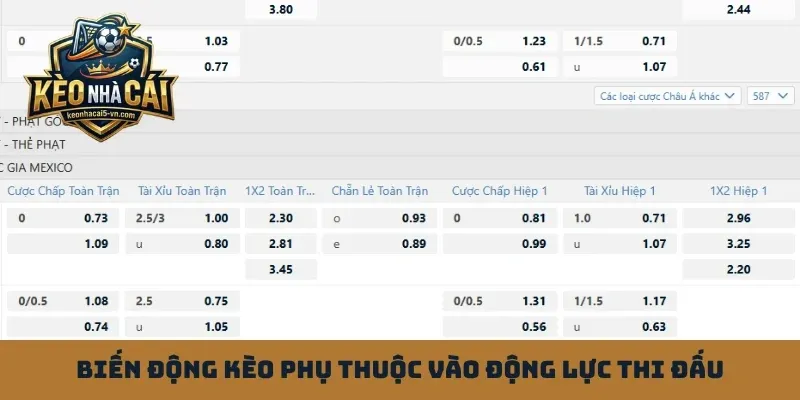
To get the most out of match analysis boards, it helps to understand the three foundational formats used to express match probabilities.
1. Asian Handicap (Handicap Lines)
Widely favored by seasoned analysts, the Asian Handicap eliminates the possibility of a draw by assigning a virtual goal advantage or disadvantage to one of the teams.
-
Level Ball (0): Neither team starts with an advantage. If the match ends in a draw, stakes are returned.
-
Quarter and Half Lines (0.25, 0.5, 0.75): These granular increments reflect subtle differences in team strength, allowing for split outcomes where half a position can win or push depending on the final goal margin.
-
Full Goal Lines (1.0, 2.0): Typically applied when a heavy favorite faces an underdog, requiring the stronger side to win by multiple goals to cover the spread.
2. Over/Under (Total Goals)
Rather than focusing on who wins or loses, the Over/Under market centers purely on the combined goal output of both teams. Analysts look closely at offensive efficiency, expected goals (xG), defensive organization, and tactical setups. A clash between two high-pressing sides often drives the total line upward, whereas a knockout-stage match between two cautious, low-block teams will usually feature a lower threshold.
3. European 1X2 (Match Result)
The most straightforward format, 1X2 represents the three classic outcomes of a football match:
-
1: Home team victory
-
X: Draw
-
2: Away team victory
Comparing 1X2 figures alongside Asian Handicap lines often reveals valuable insights into where market confidence is concentrated.
Key Factors That Influence Match Lines Before Kickoff
Numbers on an odds board do not appear out of thin air. They are shaped by a continuous interplay of on-pitch variables and broader market behavior.
Team Form and Tactical Matchups
A team riding a five-game winning streak naturally commands strong backing, yet raw results can sometimes be misleading. Underlying performance metrics—such as shots on target, possession in the final third, and defensive errors—tell a more accurate story. Furthermore, styles make fights: a possession-heavy squad might struggle against a disciplined counter-attacking unit, regardless of their respective league standings.
Squad Availability and Fixture Congestion
Modern football schedules are relentless. Clubs competing across domestic leagues, national cups, and continental tournaments often face severe fixture congestion. Squad rotation, suspension of key midfielders, or the absence of a primary center-back can shift market expectations instantly. Tracking official press conferences and training reports is vital for interpreting sudden line movements.
Market Sentiment and Line Movement
Opening lines are set based on statistical models, while closing lines reflect the collective input of the broader market. Observing how numbers shift from the moment they are released until kickoff provides clues about where informed consensus is leaning. Studying Tỷ lệ kèo bóng đá across different time intervals helps analysts distinguish between temporary public hype and genuine, data-backed adjustments.
Best Practices for Analyzing Match Statistics Effectively
Approaching football metrics with discipline separates structured analysis from guesswork. Adopting a few core habits can significantly sharpen your match evaluations:
-
Prioritize Recent Context Over Distant History: Head-to-head records from five years ago hold little weight when managers, tactical philosophies, and squad rosters have completely turned over. Focus primarily on the current season and recent tactical trends.
-
Account for Home and Away Splits: Certain teams perform like title contenders in front of their home supporters while struggling to impose their game on the road. Always evaluate home and away metrics separately.
-
Monitor Live In-Play Momentum: Pre-match projections only go so far once the whistle blows. Red cards, early goals, and tactical substitutions completely reshape match probabilities, making live statistical tracking indispensable.
-
Stay Objective and Data-Driven: Emotional attachment to a favorite club often clouds judgment. Relying on objective indicators—such as injury news, schedule fatigue, and verified market movements—ensures a clearer perspective.
By combining disciplined research with reliable real-time data tools, every football follower can deepen their understanding of match dynamics and enjoy the strategic depth behind every fixture on the calendar.
