
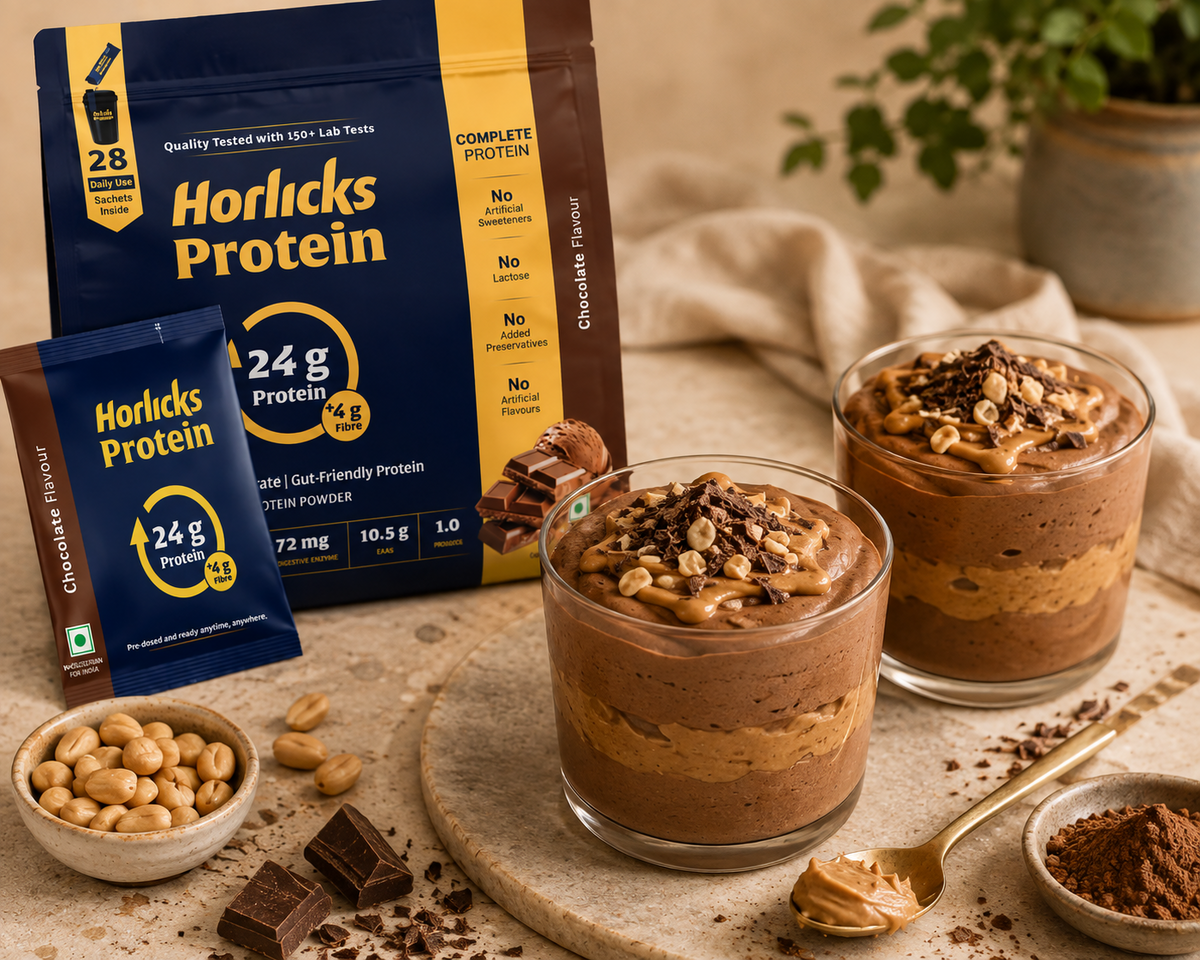
“No added sugar” and “high protein” are two separate promises. A dessert can meet one and miss the other. The simplest way to judge a recipe is to read every ingredient, including toppings. A bowl of yogurt, cocoa and fruit can be a useful starting point for high protein recipes, but honey, syrup, sweetened chocolate and flavoured yogurt will change the no-added-sugar claim.
The goal is not to make dessert sound like a health obligation. It is to make something enjoyable, with ingredients you understand, when that is the kind of dessert you want.
Start with a creamy base
Plain Greek yogurt or thick hung curd gives a dessert body. Stir in unsweetened cocoa and a little mashed banana, then chill. Chopped nuts or seeds add texture. For a fruit bowl, layer plain yogurt with berries, chopped apple or seasonal fruit. If the fruit is ripe, taste before adding any sweetener.
A chocolate mousse can be made with yogurt and peanut butter for richness. The linked Horlicks mousse recipe is a useful flavour reference, but it lists sweetener as a choice. Anyone specifically seeking no added sugar should omit added sweetener and check the label of any powder used. “No added sugar” does not mean sugar-free; fruit and milk naturally contain sugars.
Avoid the ingredient-list trap
Dates are often used in recipes instead of white sugar. They bring sweetness and texture, but using dates does not automatically make a dessert low in sugar. The same goes for jaggery, honey and maple syrup. If your brief is strictly no added sugar, be clear about whether these ingredients fit it. A recipe headline may not settle that question.
Searches for the best protein powder can also lead to sweet dessert ideas, but the powder itself needs a label check. Look at the ingredient list, serving instructions and allergen information. Choose a flavour that suits the dish; an unflavoured powder may work in a spiced pudding, while chocolate makes more sense in a cocoa dessert. The ingredient should serve the recipe, not turn every dessert into a product demonstration.
Three easy formats to try
For a frozen option, spread plain yogurt over a lined tray, top with chopped fruit and nuts, and freeze until firm. For a warm option, bake a small banana-oat cup and serve it with unsweetened yogurt. For something spoonable, mix cocoa into hung curd and chill it in small glasses. These formats can be made without powder; the dairy, nuts and seeds contribute protein.
Portion size still matters, especially in rich desserts made with nut butter or cream. Serve a sensible amount and enjoy it as dessert. There is no need to claim it replaces a meal.
The best version is the one whose ingredients match the promise in its title. If a recipe says no added sugar, the sweeteners and toppings should be accounted for. If it says protein-rich, the protein-containing ingredients should be visible in the actual serving, not buried in a long list of optional extras.
For guests, serve toppings separately. Someone may want chopped fruit, another may prefer cocoa or nuts. It keeps the base unsweetened and lets each person decide. It also makes the recipe easier to describe honestly: the dessert in the glass is not necessarily the same as the fully topped version.
FAQs
Is a dessert with dates “no added sugar”?
That depends on how the claim is being used. Dates are added for sweetness, so readers should not assume they are equivalent to an unsweetened recipe.
Can I make a protein dessert without powder?
Yes. Plain yogurt, hung curd, milk, nuts and seeds can all contribute.
Sources Checked: Horlicks chocolate peanut mousse recipe; Horlicks chocolate protein powder product page.
